As the clocks go back and the evenings draw in, more of us find ourselves driving in the dark, and for many people, that means struggling with glare from oncoming headlights. It’s a common problem: in a 2023 survey for the College of Optometrists, 76% of UK drivers said being dazzled by oncoming headlights is a problem when driving at night.
It’s no surprise, then, that yellow-tinted “night driving glasses” are so widely advertised, promising less glare and sharper vision after dark. But do night driving glasses work? Here’s what the evidence says, and what can make driving at night easier.
What Are Night Driving Glasses?
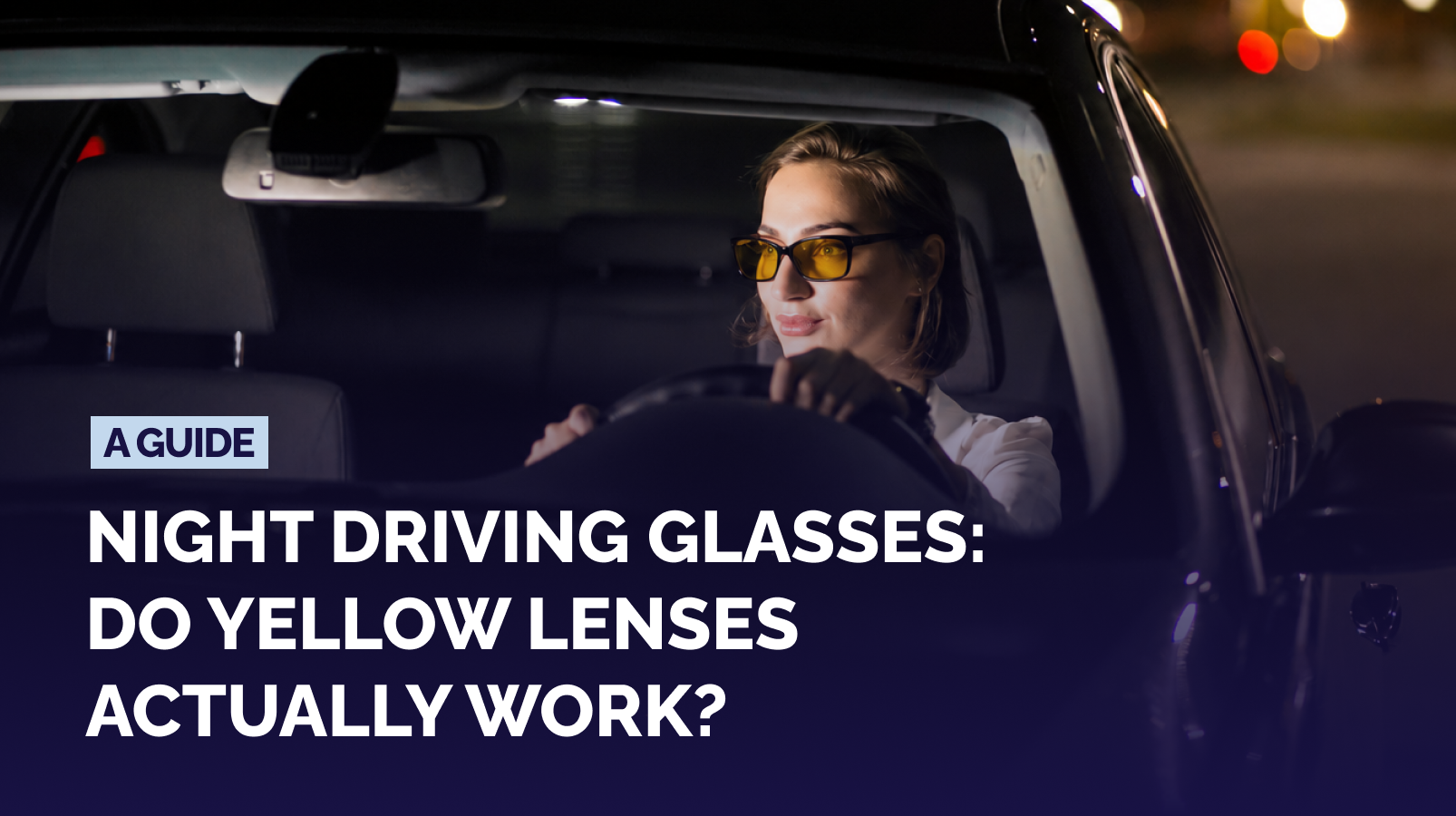
Night driving glasses usually have yellow- or amber-tinted lenses. They’re sold on the idea that the tint filters out some blue light, reduces the dazzle from headlights, and makes the road ahead look brighter and sharper.
They’re often sold online and in shops without a prescription, and some come as clip-on lenses that fit over your normal glasses.
Do Yellow Night Driving Glasses Work?
The short answer is no. Any tint, however light, reduces the amount of light reaching your eyes. In daylight, that can make things feel more comfortable. At night, when there’s already very little light, it makes dark parts of the road look even darker.
The yellow tint can make the view look brighter, but that’s an effect of the colour, not more light reaching your eyes. It doesn’t help you see more.
The research backs this up. In 2019 a study published in JAMA Ophthalmology, researchers at Harvard Medical School’s Schepens Eye Research Institute tested three makes of yellow-lens night driving glasses in a driving simulator. Drivers spotted pedestrians no sooner with yellow lenses than with clear ones, and the yellow lenses did nothing to reduce the effect of glare from oncoming headlights. The researchers also warned that the glasses could make drivers feel more confident in their night driving than they should.
The College of Optometrists, the professional body for optometrists in the UK, advises drivers to avoid yellow-tinted lenses for night driving, because they’re not proven to help and can make it harder to see dark areas of the road.
What Does the Highway Code Say?
Rule 94 of the Highway Code is clear: “At night or in poor visibility, do not use tinted glasses, lenses, or visors if they restrict your vision.”
Optometrists use a technical measure for this. The College of Optometrists recommends that lenses letting through less than 75% of light aren’t suitable for driving at twilight or at night. Sunglasses, including polarised lenses, fall well below that, so they should only ever be worn for driving in daylight.
Why Does Glare Feel Worse at Night?
When it’s dark, your pupils widen to let in as much light as possible. That helps you see in low light, but it also means bright lights, like headlights, scatter more inside the eye and dazzle you for longer.
Glare can also be a sign of an eye condition, especially if it’s new or getting worse:
- Cataracts: Clouding of the lens inside the eye scatters light, causing glare and haloes around headlights and streetlights.
- Astigmatism: An uncorrected or out-of-date prescription can make lights look streaky or smeared.
- Dry Eye: An uneven tear film on the surface of the eye can blur vision and make glare worse, particularly with the car heater blowing.
Age plays a part too. As we get older, our eyes let in less light and take longer to recover from glare. In the 2019 study, glare slowed older drivers’ reactions to pedestrians by 1.5 seconds, compared with 0.3 seconds for younger drivers.
What Actually Helps When Driving at Night?
Keep Your Prescription Up to Date
Even a small change in your prescription can make a noticeable difference after dark. If you need glasses to drive, you must wear them every time you drive. Yet the same College of Optometrists survey found that 24% of drivers who’d been told to wear glasses for driving admit that they don’t always do so. If it’s been more than two years since your last eye test, or you’ve noticed night driving getting harder, book an eye test.
Ask About an Anti-Reflection Coating
Rather than a tint, an anti-reflection coating on clear prescription lenses reduces the reflections bouncing around your lenses from headlights and streetlights, without darkening your view of the road.
Don’t Look Straight at Oncoming Headlights
If you’re dazzled, look towards the left edge of your lane rather than into the lights, and slow down if you need to until your vision recovers.
Keep a Spare Pair in the Car
If you only need glasses for driving, keeping a spare pair in the glove box means you’re never caught without them.
Night Driving Glasses FAQs
Are Night Driving Glasses Legal?
They’re legal to sell, but the Highway Code says not to use tinted glasses at night or in poor visibility if they restrict your vision. Because any tint reduces the light reaching your eyes, they’re best avoided after dark.
Can I Wear Polarised Sunglasses to Drive at Night?
No. Polarised sunglasses are excellent for cutting glare in bright daylight, but they let through far too little light for driving at dusk or in the dark.
Do I Need to Tell the DVLA if I Struggle to See at Night?
Not just because night driving feels harder. But you must meet the eyesight standard for driving, and you must tell the DVLA about certain eye conditions. Our guide to whether you need to tell the DVLA you wear glasses explains the rules.
When Should I See an Optometrist About Night Driving?
If glare is new, getting worse, or you’re seeing haloes or starbursts around lights, book an eye test. Your optometrist can check for cataracts, astigmatism, and dry eye, and make sure your prescription is right for driving.
See Clearly After Dark
Yellow night driving glasses might look like a quick fix, but the evidence shows they don’t help you see better at night, and they can make the darkest parts of the road harder to see. Clear, up-to-date prescription lenses with an anti-reflection coating, clean glasses, and a regular eye test do far more to keep you safe on the road this winter.
If night driving is getting harder, book an eye test at your nearest D.I. Blow Opticians branch.