Air conditioning is a welcome relief during hot weather and an essential feature in many workplaces, shops, and homes. However, while it helps regulate temperature and improve indoor comfort, it can also have an unexpected effect on eye health.
If you’ve ever experienced itchy, watery, tired, or uncomfortable eyes while working in an air-conditioned environment, you’re not alone. Air conditioning is one of the most common environmental factors associated with dry eye symptoms. Understanding the relationship between air conditioning and dry eyes can help you take steps to protect your vision.
Why Does Air Conditioning Affect Your Eyes?
Your eyes are protected by a thin layer of tears known as the tear film. This film helps keep the eye lubricated, remove debris, and provides essential nutrients to the surface of the eye.
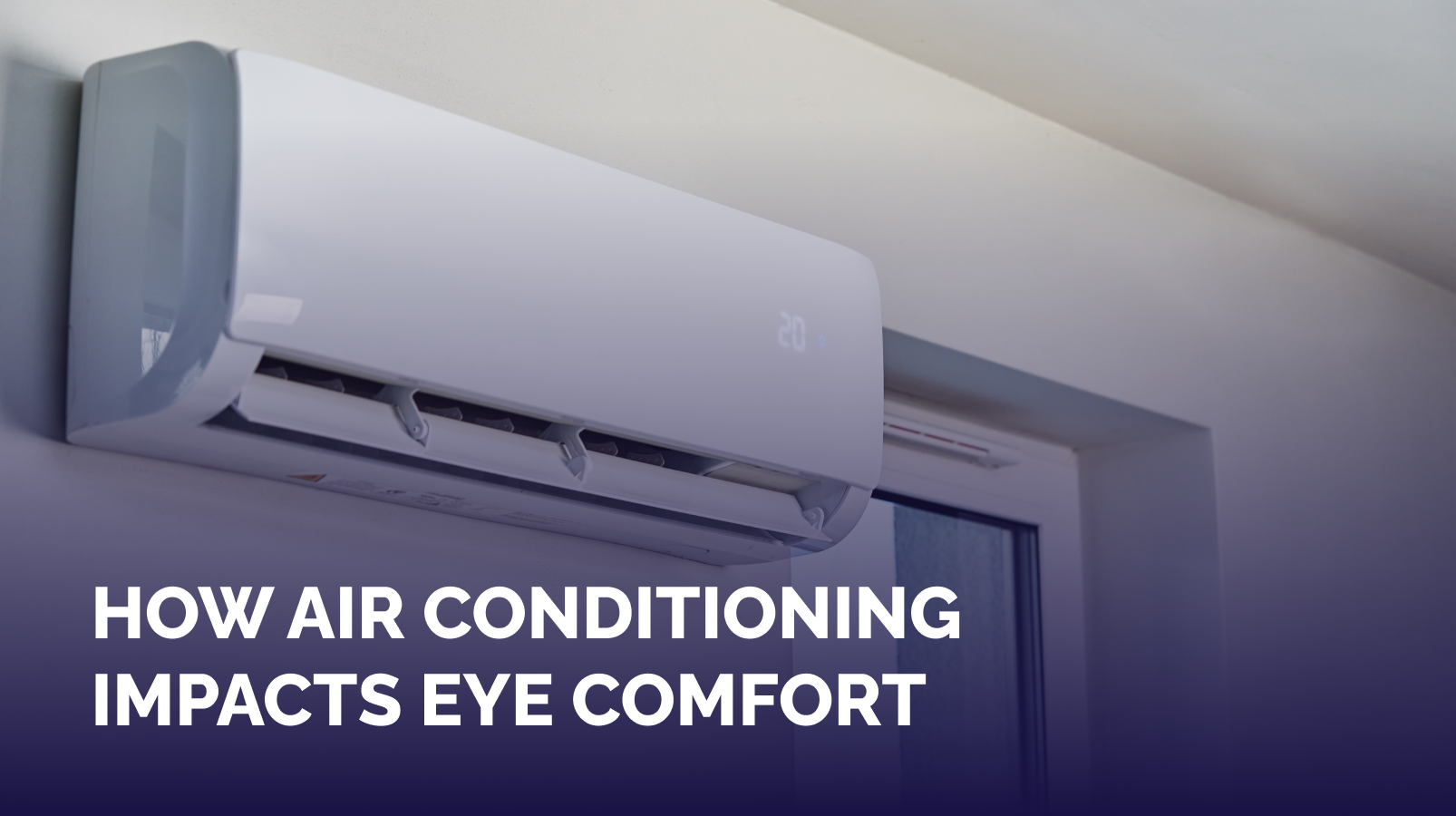
When air conditioning systems circulate cool, dry air, they can accelerate tear evaporation. As tears evaporate more quickly than they are replenished, the surface of the eye becomes less lubricated, leading to irritation and discomfort.
The Link Between Air Conditioning and Dry Eyes
Research has shown that indoor environments can significantly affect eye comfort.
A study published in the journal Environmental Health Perspectives found that office workers in air-conditioned buildings reported higher rates of eye irritation and dryness compared to those in naturally ventilated environments.
Similarly, the Tear Film & Ocular Surface Society Dry Eye Workshop II (DEWS II) report identified low humidity and air-conditioning as recognised environmental risk factors for dry eye disease.
Common Symptoms of Dry Eyes Caused by Air Conditioning
The symptoms can vary from person to person, but often include:
- Dry or gritty sensations
- Burning or stinging eyes
- Excessive watering
- Redness
- Blurred vision
- Light sensitivity
- Tired eyes
- Difficulty wearing contact lenses
Ironically, watery eyes are often a symptom of dryness. When the eyes become irritated, they may produce reflex tears that do not adequately lubricate the eye’s surface.
Why Office Workers Are Particularly Affected
Many people experience dry eyes in office environments because several contributing factors often occur simultaneously.
Continuous Air Conditioning
Offices frequently use air conditioning throughout the day, creating low-humidity environments that encourage tear evaporation.
Prolonged Screen Use
Research suggests that people blink significantly less when using digital screens. A typical blink rate of 15-20 blinks per minute can fall by as much as 50% during intensive screen work. Reduced blinking means fewer opportunities to spread fresh tears across the eye surface.
Indoor Air Quality
Dust, ventilation, and low humidity levels can further contribute to irritated eyes indoors.
When combined with long working hours, these factors can create the perfect conditions for chronic eye discomfort.
Other Causes of Dry Eyes
Whilst air conditioning is a common trigger, there are many other causes of dry eyes. These include:
- Ageing
- Hormonal changes
- Contact lens wear
- Certain medications
- Autoimmune conditions
- Previous eye surgery
- Excessive screen use
- Wind exposure
- Smoking
In many cases, dry eye symptoms result from a combination of factors rather than a single cause.
How to Improve Eye Comfort
There are several practical ways to reduce symptoms and improve comfort:
- Avoid Direct Airflow: Try not to sit directly beneath/next to air conditioning vents or fans. Air blowing directly on your face can increase tear evaporation.
- Follow the 20/20/20 Rule: When using screens, every 20 minutes look at something 20 feet away for 20 seconds. This encourages blinking and reduces eye strain.
- Stay Hydrated: Dehydration can affect tear production, so drinking sufficient water throughout the day may help support eye comfort.
- Use Artificial Tears: Lubricating eye drops can help supplement your natural tear film and reduce dryness. An optometrist can recommend suitable products based on your symptoms.
When Dry Eyes Become a Chronic Problem
For some people, simple lifestyle changes might not be enough. Persistent symptoms may indicate an underlying dry eye condition, particularly if discomfort continues despite using lubricating drops or making environmental adjustments.
Dry eye disease affects millions of people worldwide. Research published in The Ocular Surface estimates that approximately 5-50% of the global population may experience dry eye symptoms, depending on age, location, and diagnostic criteria.
Many cases are linked to a condition known as Meibomian Gland Dysfunction (MGD), in which the glands that produce the oily layer of tears do not function properly. Without this protective oil layer, tears evaporate more quickly, worsening dryness.
Advanced Treatment Options for Dry Eye Disease
If dry eye symptoms are affecting your quality of life, professional treatment may be beneficial.
At D.I. Blow Opticians, we offer patients advanced dry eye assessments and treatments, including IPL Dry Eye Treatment.
Intense Pulsed Light (IPL) therapy is increasingly used to manage dry eye disease associated with Meibomian Gland Dysfunction. The treatment works by addressing inflammation round the eyelids and helping improve the function of the oil-producing glands that support a healthy tear film.
For patients struggling with ongoing symptoms or persistent discomfort, IPL may provide longer-term relief when conventional treatments have not been effective.
When Should You See an Optometrist?
It’s worth booking an eye examination if you experience:
- Persistent dryness
- Frequent redness
- Burning or stinging sensations
- Blurred vision
- Symptoms that interfere with work or daily activities
An optometrist can determine whether your symptoms are environmental or whether an underlying dry eye condition requires treatment.
Air conditioning can significantly contribute to eye discomfort by increasing tear evaporation and leading to dry eyes in office environments and other indoor settings. While occasional dryness can often be managed with lifestyle changes, persistent symptoms may indicate a more complex issue affecting your tear film.
Understanding the causes of dry eyes and taking proactive steps to improve eye comfort can make a big difference. If symptoms continue despite self-care measures, professional assessment and treatments such as IPL therapy may help address the root cause and provide lasting relief.