VDU stands for Visual Display Unit: any screen you look at for work, including computer monitors, laptops, and tablets. Looking at a VDU for long periods can cause eye strain, headaches, and dry eyes, a group of symptoms called Computer Vision Syndrome (CVS) or VDU syndrome.
If your job involves regular screen use, you’re legally entitled to a free eye test from your employer, and to VDU glasses if your optometrist finds you need a prescription specifically for screen distance. Below, we explain what VDU glasses are, what causes VDU syndrome, how to prevent it, and what your employer has to provide.
If you have dry eyes, eyestrain, headaches, or even difficulty focusing right after or during use of a VDU screen, then chances are you have Computer Vision Syndrome (CVS) and may need to take measures to avoid it.
What Are VDU Glasses?
VDU glasses (sometimes called computer glasses or occupational glasses) are prescribed specifically for the distance between your eyes and your screen (usually around arm’s length) rather than for everyday distance or reading vision. If you spend long hours at a screen and find yourself squinting, leaning in, or getting headaches by the end of the day, VDU glasses are often the fix, even if your regular distance or reading prescription is otherwise fine.
Not everyone who uses a screen for work needs a separate prescription; your optometrist will only recommend VDU glasses if your eye test shows you’d benefit from one. If they do, your employer is legally required to contribute towards a basic pair used solely for VDU work, so you’re not expected to cover the full cost yourself. You’re welcome to choose a smarter frame if you’d like, but you’ll only need to cover the difference in price.
An eye test at D.I. Blow Opticians will show whether you need a separate prescription for screen work. Tell your optometrist how many hours you spend at a screen and how far away it sits.
Eye Examinations
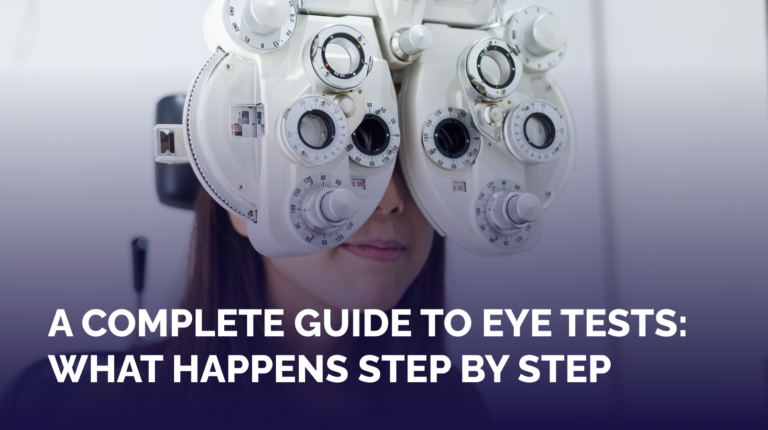
Your eye test will include questions regarding the kind of VDU screen you use at work or at home to check whether you’re facing any problems.
The amount of focus and muscle work your eyes do can be assessed through an eye examination and you will be advised accordingly. The College of Optometrists’ patient guidance, Look After Your Eyes, has further tips on protecting your eyes during screen use.
Tips For Prevention
The main risk to your eyes comes from staring at a screen for too long. For this, it is important to take regular breaks every 20 minutes to look away from the screen. This should be sufficient rest for your eyes.
Make adjustments to your monitor or screen.
Most screens come with the option of adjusting contrast, this can be manipulated to a point where the stress being cause to the eyes is at bare minimum. In order to cause less stress, the font size on your screen can be zoomed in or adjusted.
Avoiding glare and check for lights around the screen.
It is important to make sure there aren’t any bright lights around your computer screen, and that you take steps to avoid any glare being reflected off. To alleviate this, anti-glare screen can be used to reduce the damaging reflections off the screen.
Blink consistently to avoid dry eyes.
Most people while concentrating on a screen for too long do not blink as much. This is one of the main causes of dry eyes among people. For people who get dry eyes whilst using computer screens, this is a major symptom of CVS. However, it can be reduced and relieved by consulting an optometrist to get recommended, appropriate eye drops. This symptom is more common among people who use contact lenses.
Make regular eye care appointments.
The recommended period for adults is once every two years, however, it doesn’t hurt to be careful and make more regular visits. An optometrist can tell if there is any oncoming eye disease or detect other minor problems early on.
The Law
If you use a screen as a significant part of your job, the Health and Safety (Display Screen Equipment) Regulations 1992 say your employer must arrange an eye test for you if you ask for one, and again at regular intervals your optometrist recommends.
If the test shows you need glasses specifically for screen work, your employer must pay for a basic pair for that purpose. You can choose a different frame, but you’ll have to pay the difference, Your employer doesn’t have to pay for glasses you need for everyday use.
Who Qualifies?
The Health and Safety Executive’s Display Screen Equipment (DSE) Regulations 1992 guidance implemented an EC Directive that came into effect in January 1993. These regulations require employers to minimise the risk in VDU work by ensuring that workplaces and jobs are well designed. The regulations apply where staff habitually use VDUs as a significant part of their normal work.
Regulation 1 of the DSE regulations states that a ‘user’ is “an employee who habitually uses DSE as a part of his or her normal work”. A ‘user’ may work from home. Some ‘users’ will be more obvious than others. The regulations require employers to minimise the risks on VDU work.
If most, or all, of the following criteria are met, the employee is a ‘user’:
• DSE is necessary for the job as alternative means are not readily available.
• There is no choice over the use of DSE.
• Significant training and/or specific skills in the use of the DSE are required.
• The Employee normally uses DSE for continuous spells of an hour or more at a time.
• DSE is used more or less daily.
• The fast transfer of information between the employee and screen is an important requirement of the job.
• The performance requirements of the system demand high levels of attention and concentration by the user, for example where the consequence of error may be critical.
Frequently Asked Questions
What does VDU stand for?
Visual Display Unit: any screen used for work, including computer monitors, laptops, and tablets.
What are VDU glasses?
Glasses prescribed specifically for screen-distance vision, rather than general distance or reading vision.
Does my employer have to pay for VDU glasses?
Yes, if your optometrist finds you need glasses specifically for VDU work, your employer must contribute towards a basic pair.
What is VDU syndrome?
A cluster of symptoms (eye strain, headaches, dry eyes) caused by prolonged screen use, also known as Computer Vision Syndrome.
What Does “VDU Use Only” Mean on a Glasses Prescription?
It means the glasses are prescribed for screen distance only. They aren’t suitable for driving or general wear, and your employer’s contribution covers them only for screen work.
What Is a VDU Eye Test?
It’s an eye test that includes questions about your screen use and checks your focus at screen distance. If you’re a regular screen user, your employer should arrange or pay for it if you ask.
If you regularly work at a screen, book an eye test at your nearest D.I. Blow branch to check whether your eyes need extra support. It’s also worth knowing who to see for a vision concern, and if you drive for work, whether you need to tell the DVLA you wear glasses.