
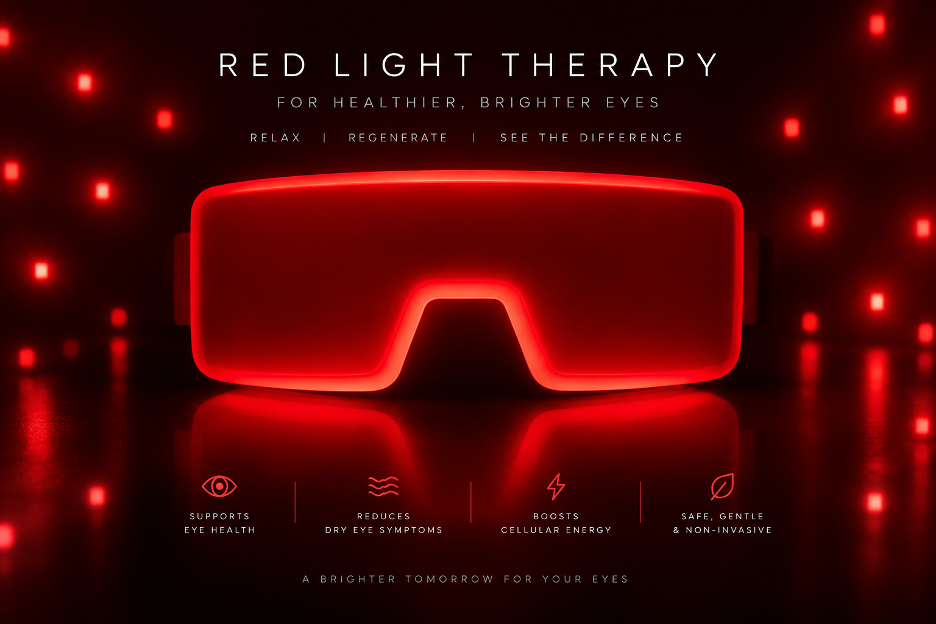
How does it work?
- Red and Near infrared wavelengths of light (typically 630 to 850 nanometers) shine onto the skin and underlying tissues.
- The light is absorbed by our cells, particularly by the mitochondria — the cell’s energy-producing “powerhouses”.
- This causes a chemical reaction that increases the production of ATP (Adenosine Triphosphate) – The primary energy currency of our cells.
- Increased cellular energy can support the body’s natural repairing and healing processes.
- It will also help to reduce inflammation and improve blood flow to promote tissue repair.
- In simple terms: Red Light → stimulates cells → more cellular energy → supports repair & reduces inflammation.
Red light therapy can therefore be used across a range of healthcare settings and can provide a variety of benefits, including improved dry eye symptoms and supporting macular health in patients with Dry Age-related Macular degeneration (AMD).
Dry eyes
Red light therapy, often referred to as low-level light therapy (LLLT) or photobiomodulation (PBM), is a non-invasive treatment that uses specific red and near-infrared light wavelengths to stimulate meibomian glands in the eyelids – These oil glands are vital in producing good quality tears to keep your eyes hydrated.
This will help to:
- Improve tear film quality
- Reduce inflammation
- Improve symptoms of red, burning or dry eyes
- Make your eyes feel more comfortable
Evidence shows that LLLT and IPL (Intense Pulsed Light) therapy can be highly effective in treating dry eye symptoms when used in combination.
Age-related Macular Degeneration (AMD)
There are also potential benefits to macular health when using Red light therapy. Red light can stimulate the mitochondria in retinal cells to boost energy (ATP) production which can support repair and reduce inflammation.
Lowering inflammation and oxidative stress can also help to avoid/reduce retinal cell death.
Clinical studies have shown that Red light therapy may improve visual acuity and contrast sensitivity in patients with early to intermediate Dry AMD. However, for best results in helping to support macular health, yellow light (590nm) should also be used. This is an area of study that we are currently looking into in more detail.