If you wear glasses and want proper sun protection without switching to contact lenses, prescription sunglasses give you your exact prescription in a pair of permanently tinted lenses. In this complete guide, we cover the different types available, what they cost, which brands we stock, and how they compare to transition lenses if you’re still deciding between the two.
What Are Prescription Sunglasses?
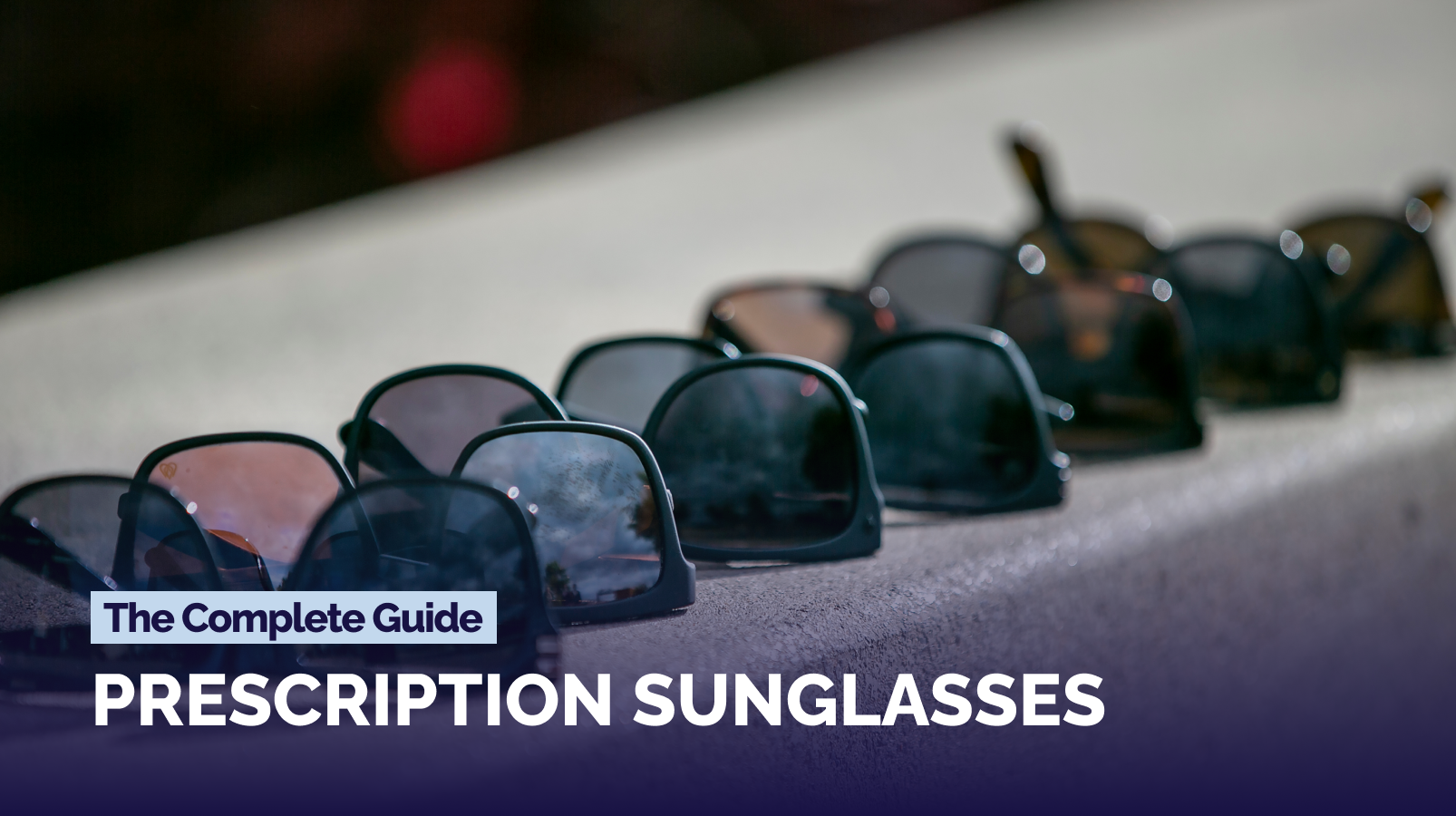
Prescription sunglasses are specifically manufactured glasses that include your exact prescription but with fixed tinted lenses designed to protect your eyes from bright sunlight. Unlike transition lenses, they do not change tint; they are always shaded and often come with added features such as polarised lenses to reduce glare.
Prescription sunglasses are ideal for extended outdoor use, driving, and situations where maximum UV protection and visual comfort are a priority.
Types of Prescription Sunglasses
Standard Tinted Lenses
A single, fixed tint across the whole lens, available in a wide range of colours and darkness levels to suit your style and how much light you want blocked.
Polarised Prescription Sunglasses
Add a filter that cuts glare from flat reflective surfaces like water, wet roads, and glass, on top of your prescription. If you’re deciding whether polarised is right for you, our guide to polarised vs non-polarised lenses covers the pros, cons, and who benefits most in detail.
Gradient and Mirrored Tints
Gradient lenses fade from dark at the top to lighter at the bottom, useful for driving. Mirrored coatings reflect extra light away from your eyes, popular for very bright or high-altitude conditions.
Why UV Protection Matters
Whatever tint or style you choose, look for lenses offering 100% UVA/UVB protection (often labelled UV400). The College of Optometrists recommends UV-protective eyewear whenever you’re in strong sunlight, since cumulative UV exposure over the years is linked to cataracts and other eye conditions. Darker lenses don’t automatically mean better UV protection; always check the label rather than judging by tint alone.
How Much Do Prescription Sunglasses Cost?
Prescription sunglasses typically cost more than a standard pair of glasses, since they combine your prescription with a specialist tinted or polarised lens. Exact pricing depends on your prescription strength, lens type, and frame choice – ask your local D.I. Blow practice for current pricing when you book. Many people find the cost worthwhile if they spend significant time outdoors or driving, since prescription sunglasses remove the need to wear contact lenses or fit clip-on tints over regular glasses. If a stronger prescription is also making your everyday lenses feel thick, our guide to thin vs standard lenses is worth a read too.
Which Brands Do You Stock?
At D.I. Blow Opticians, we stock a range of designer brands that suit different styles and budgets, including Ray-Ban, Tom Ford, Maui Jim, Michael Kors, and Silhouette, among others in our brand range. Our team can talk you through which styles and lens options work best for your prescription and lifestyle.
Transition Lenses: The Alternative to Prescription Sunglasses
If you’d rather not switch between two pairs of glasses, transition lenses (also called photochromic lenses) are worth considering as an alternative. They automatically darken when exposed to UV light and become clear indoors or in low light, responding to changing conditions throughout the day.
This technology is particularly appealing for people who move frequently between indoor and outdoor environments, as it offers a one-glasses solution for both vision correction and sunlight protection.
Pros of Transition Lenses
Convenience & Versatility
Transition lenses adapt automatically to varying light conditions, indoors, outdoors, and everything in between. This means you can wear one pair of sunglasses all day without switching between regular glasses and sunglasses.
Continuous UV Protection
Photochromic lenses provide consistent UV protection whether they are clear or darkened, helping safeguard your eyes from UVA and UVB rays that can contribute to eye health issues over time.
Cost-Effective for Everyday Users
Because you only need one pair, transition lenses can be more economical than purchasing both regular glasses and separate prescription sunglasses, especially if you’re replacing old prescription lenses.
Reduced Risk of Misplacement
Fewer glasses to carry, many fewer chances of forgetting or losing your eyewear. Many wearers appreciate the simplicity of having only one pair.
Adaptive Comfort
Transition lenses can reduce glare and eye strain by automatically adjusting to changing light conditions, making them ideal for everyday activities.
Cons of Transition Lenses
Slower Response Times
Whilst modern transition lenses are faster than earlier versions, they still take time to darken and then clear, typically seconds to minutes, which might not be instant enough for some situations.
Performance in Vehicles
Because photochromic lenses depend on UV light to activate, traditional transition lenses may not darken effectively behind car windscreens that block UV rays. This means they may not be as useful as sunglasses for long-distance driving in bright sunlight.
Limited Darkness Compared to Sunglasses
Transition lenses don’t always reach the same level of tint as dedicated sunglasses, particularly in very bright conditions.
Temperature Dependency
Cold weather can slow the transition process, whilst heat can speed it up. Performance may depend on the season.
Residual Tint Indoors
Some people notice a slight tint under the bright indoor lighting, which might affect visual clarity or personal preference.
Which Is Right for You?
There’s no single answer; it depends on your lifestyle, daily habits and visual priorities:
- Prescription sunglasses are ideal if you spend significant time outdoors, especially driving, playing sports, or in particularly bright environments, and want maximum tint strength and, if you choose, polarisation.
- Transition lenses suit those who want simplicity and continuous UV protection without carrying a second pair of glasses.
At D.I. Blow Opticians, we can assess your visual needs during a comprehensive eye exam and help you decide whether transition lenses, prescription sunglasses or both are the best solution for you.
Once you’ve chosen your sunglasses, a little care goes a long way – see our tips for caring for your sunglasses. And if you’re also updating your frames, our guide to which glasses suit your face shape can help you choose a style that works for you. For the full picture on lens types, tints and UV protection, see our Sunglasses Lens Guide.
So, whether you go for a dedicated pair of prescription sunglasses or the convenience of transition lenses, the right choice comes down to your lifestyle and how you use your eyewear day to day. Book an eye test or book an appointment today to speak with our friendly expert team.
FAQs
Are Prescription Sunglasses Worth It?
For most people who spend meaningful time outdoors or driving, yes, they give full UV protection and clear vision at your exact prescription without needing contact lenses or clip-on tints. If you only need sun protection occasionally, transition lenses or a low-cost non-prescription pair over contacts might suit you better.
Can You Get Polarised Prescription Sunglasses?
Yes, polarisation can be added to prescription lenses to reduce glare from water, roads, and glass on top of your prescription and tint.
How Much Do Prescription Sunglasses Cost?
Cost depends on your prescription, lens type (standard tint, polarised, or gradient), and frame choice. Ask your local D.I. Blow practice for current pricing.
What’s the Difference Between Prescription Sunglasses and Transition Lenses?
Prescription sunglasses are permanently tinted and offer maximum sun protection outdoors. Transition lenses adapt automatically between clear and dark depending on light conditions, so you only need one pair of glasses. Both can be fitted with your exact prescription.
Can I Get Prescription Sunglasses in any Style?
Yes, most frame styles can be made with prescription sunglass lenses, including designer brands. Our team can advise on frame shapes and lens types that suit your prescription and face shape.