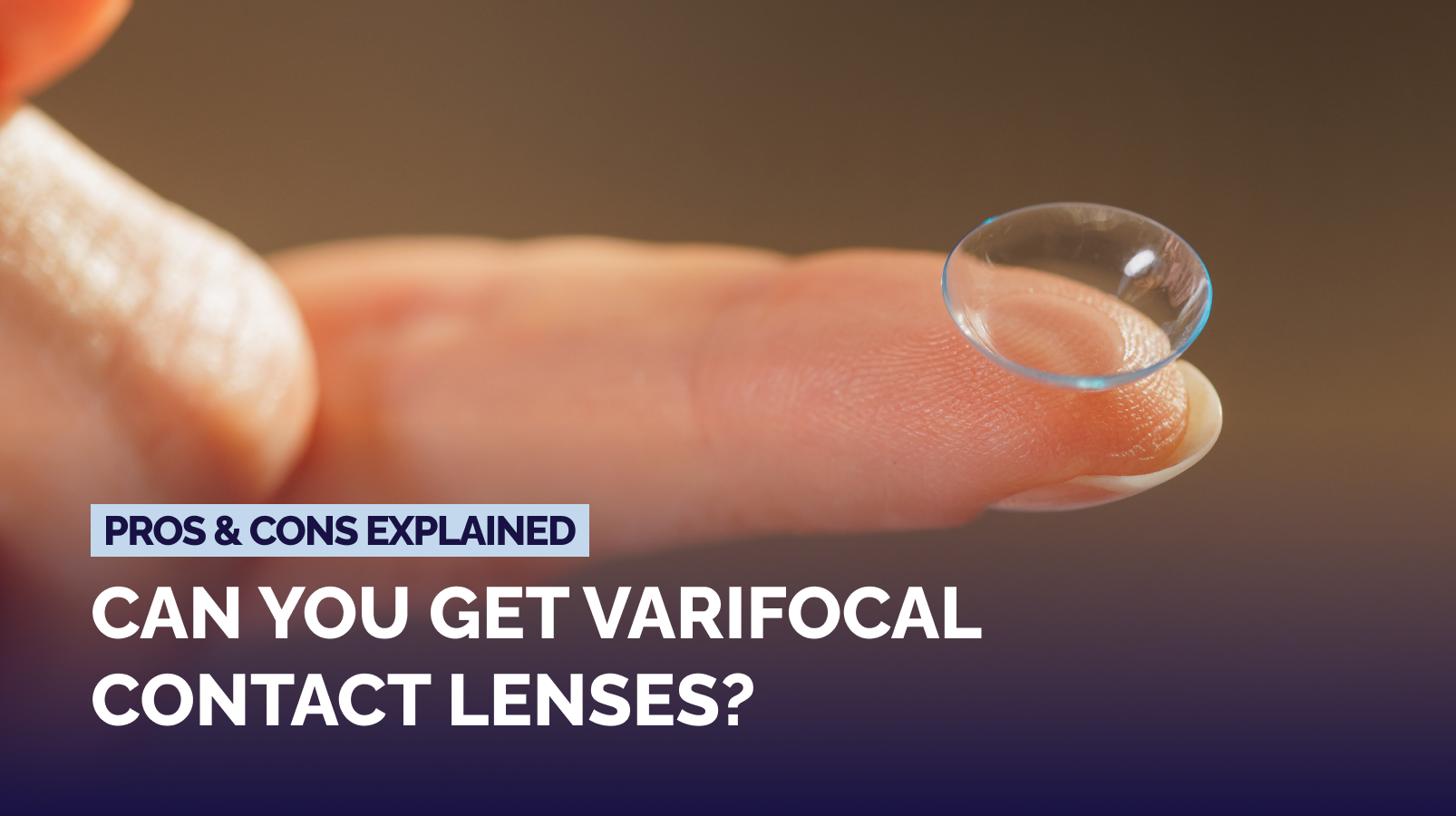
If you’ve noticed that your near and far vision aren’t quite what they used to be, you may have heard about varifocal contact lenses, a modern option that promises clear sight at all distances without the need for glasses. In this complete guide, we explain how varifocal contact lenses work, the pros and cons to consider, and how our specialist team can help you decide.
What Are Varifocal Contact Lenses?
Varifocal contact lenses are specially designed multifocal lenses that allow you to see clearly at multiple distances, from distance vision to intermediate (like computer screens) and close-up tasks such as reading. Unlike standard single-vision lenses, which only correct vision at one distance, varifocal contacts contain multiple prescription zones blended smoothly in the lens.
They work in a similar concept to varifocal (progressive) glasses, but in contact lens form. This means your eyes use different parts of the lens depending on what you’re looking at, all without needing to switch between glasses.
Can I Get Varifocal Contact Lenses?
Yes, varifocal contact lenses are available in the UK from professional opticians such as D.I. Blow Opticians. They’re most commonly recommended for people experiencing presbyopia (age-related difficulty focusing on close objects), which typically starts in your 40s and beyond. If you think you may be a candidate, our contact lens service includes a fitting consultation to check suitability before you commit.
Pros of Varifocal Contact Lenses
1. Clear Vision at All Distances
One of the biggest advantages is that varifocal contact lenses provide vision correction for near, intermediate, and distance vision in a single lens. That means you don’t have to juggle reading glasses and regular contacts, perfect for everyday activities.
2. Stable, Natural Vision
Because the lens moves with your eye, many people find that varifocal contact lenses offer a more natural field of vision than glasses, especially for activities like walking or working on a computer.
3. Great for Active Lifestyles
If you dislike glasses slipping or fogging up during sports and outdoor activities, varifocal contact lenses can be an excellent solution, letting you stay focused without visual interruptions.
4. No Need for Multiple Eyewear
Perhaps the biggest practical benefit is simplicity; you don’t have to carry or switch between different eyewear for reading and distance tasks.
Cons of Varifocal Contact Lenses
1. Adjustment Period
Many wearers find a short adaptation period as their eyes and brain adjust to switching between prescription zones. Some people might experience mild headaches or blurred vision initially, but most adapt over time.
2. Cost Considerations
Varifocal contact lenses can be more expensive than standard single vision lenses due to their advanced design and fitting requirements. However, a personalised fit and ongoing support from an optician like D.I. Blow can significantly improve comfort and performance. Ask about a free trial before committing to a full supply, so you can check they suit you first.
3. Nighttime Vision Challenges
Some people report more difficulty focusing in low-light conditions or at night, particularly if their prescription changes significantly between distances.
Getting Fitted for Varifocal Contact Lenses
Getting the right fit matters more with varifocal contact lenses than with standard single-vision lenses, since the lens needs to sit precisely to give you clear vision across all three prescription zones. Our team follows fitting standards set by the British Contact Lens Association (BCLA), the UK’s professional body for contact lens practitioners, and will usually book at follow-up check a few weeks into your trial to fine-tune the fit if needed.
Are Varifocal Contact Lenses Right for Me?
Varifocal contact lenses are an excellent option for many people, but they aren’t perfect for everyone. Your lifestyle, visual needs, eye health and tolerance for adaptation all play a role in determining whether they’re the best choice.
For example:
• If you work long hours on screens, a trial period can help determine suitability.
• If you have dry eyes or other conditions, specific lens materials might improve comfort.
• Some individuals may still prefer varifocal glasses for certain tasks, especially if the adaptation period with contacts is uncomfortable. Our contact lens vs glasses guide goes into more detail on how to weigh up that decision.
This is where expert guidance matters most.
So, can you get varifocal contact lenses? Yes, and they can be a fantastic solution if you want clear vision at every distance without switching between contacts and glasses. But these lenses require careful fitting, a bit of adaptation, and personalised advice, all of which you’ll find at D.I. Blow Opticians.
If you’re curious about varifocal contact lenses or want to explore your contact lens options, book an appointment today to speak with our friendly, expert team. We’ll help you find the vision solution that’s best for your eyes and your lifestyle.
FAQs
Are Varifocal Contact Lenses Any Good?
Most wearers who persevere through the initial adjustment period find them a genuinely convenient alternative to switching between reading glasses and regular contacts. As with any contact lens, individual experience varies; a trial fitting is the best way to know whether they’ll work for you.
I Already Wear Varifocal Glasses — Can I Wear Contact Lenses Instead?
Yes. If you’re used to varifocal (progressive) glasses, you can usually be fitted with varifocal contact lenses that work on the same multi-zone principle, so you don’t have to go back to single-vision contacts and reading glasses. A fitting consultation with our team will confirm whether your current prescription and eye health make you a suitable candidate, and you can trial the lenses before committing to a full supply.
How Long Does it Take to Adjust to Varifocal Contact Lenses?
Most people adapt within a few days to a couple of weeks. Some notice mild headaches or blurring at first as their eyes learn to adapt to the different prescription zones, which typically settle as you get used to the lenses.
Can I Try Varifocal Contact Lenses Before Buying a Full Supply?
Yes, ask about a free trial when you book a contact lens fitting, so you can test comfort and clarity across a few days before committing.
Are Varifocal Contact Lenses More Expensive Than Regular Contacts?
Generally yes, due to the more complex lens design and the fitting expertise required to get them right. Costs vary brand by brand and prescription; your optician can talk you through current pricing at your fitting.
What’s the Difference Between Varifocal Contact Lenses and Varifocal Glasses?
Both correct near, intermediate, and distance vision in one lens, but contact lenses move with your eye rather than requiring you to look through a specific part of a fixed lens like glasses do. Some people find one more natural than the other; our contact lens vs glasses guide compares both in more depth.