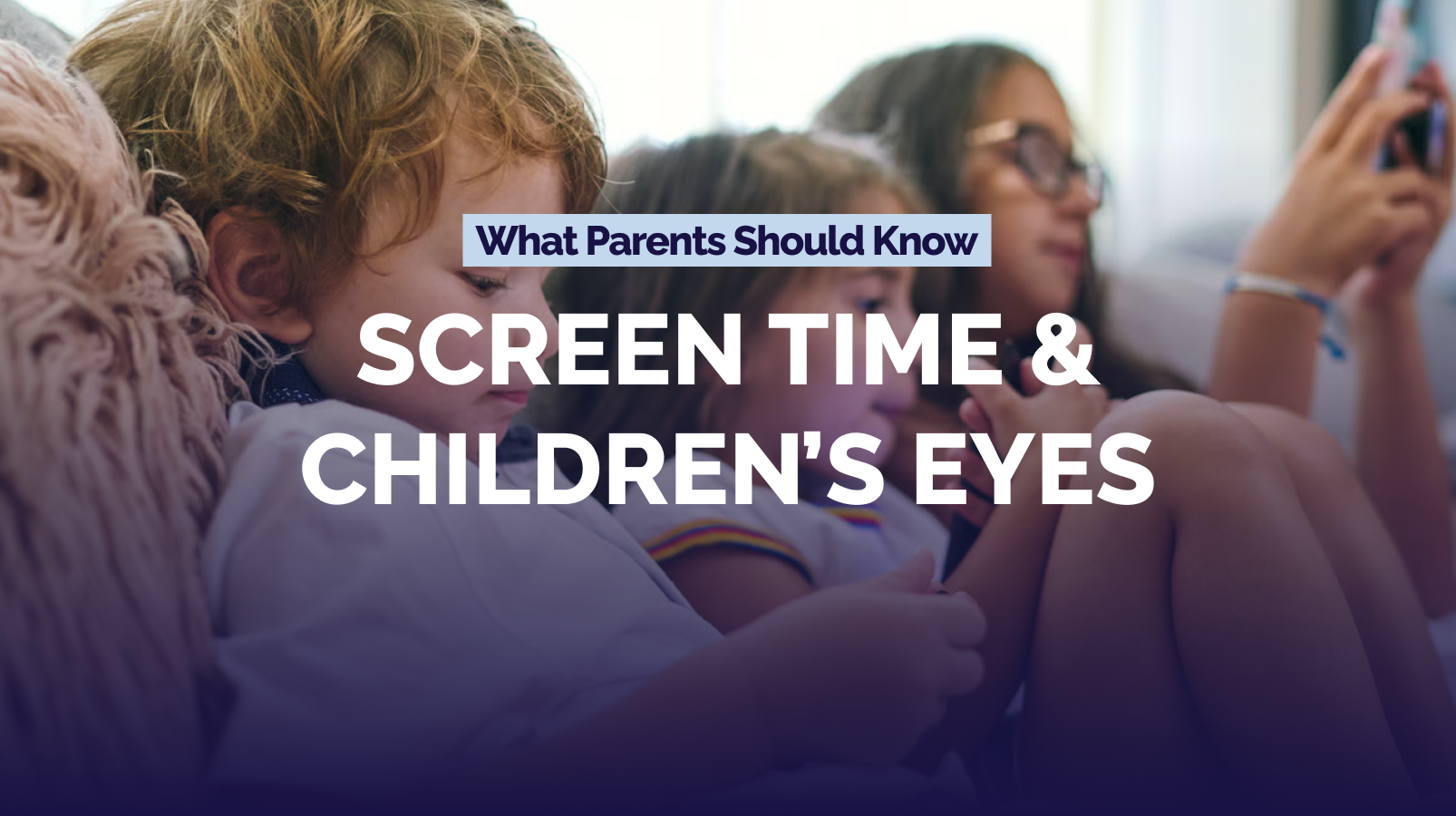
Screen use is now part of everyday life for most children, from schoolwork and gaming to social media and streaming. Whilst screens themselves are not proven to permanently damage children’s eyes, too much close-up screen time without breaks can affect comfort, visual development, sleep, and overall eye health habits. Here’s what parents need to know.
Are Screens Damaging Children’s Eyes?
The old myth of screens turning your eyes square is still a myth. Screens do not directly damage the eyes through blue light exposure. The Association of Optometrists (AOP) says there is no scientific evidence that blue light from screens harms children’s eyes.
However, prolonged screen use can contribute to:
- Digital eye strain
- Tired or sore eyes
- Dry eyes
- Headaches
- Blurred vision
- Difficulty focusing
- Increased sensitivity to light
- Reduced blinking
- Poor sleep patterns
- Potential progression of short-sightedness (myopia)
These issues are mainly linked to spending long periods of time focusing on nearby objects rather than on the screen itself.
What is Digital Eye Strain?
Digital eye strain (sometimes called computer vision syndrome) happens when children spend long periods looking at screens without breaks.
Common signs include:
- Rubbing eyes frequently
- Complaining of headaches
- Squinting
- Blurred vision
- Tired eyes
- Holding devices very close
- Difficulty concentrating
- Increased blinking or watery eyes
Children often do not realise these symptoms are linked to screens, so parents may notice behavioural clues first. Many of these overlap with the general warning signs covered in our guide on how to recognise signs of vision problems in children.
Can Screen Cause Short-Sightedness (Myopia)?
Research suggests excessive near work, activities involving close focus such as screens, reading, or tablets, may contribute to the development or worsening of myopia, especially when combined with reduced outdoor time.
Myopia is becoming increasingly common worldwide. Experts believe lifestyle changes play a role, including:
- More outdoor time
- Less exposure to natural daylight
- Increased close-up visual tasks
- Extended screen use
The NHS and optometrists recommend encouraging outdoor activity because time spent outdoors appears protective against the development of myopia. Some studies suggest that around two hours of outdoor activity daily might help.
How Much Screen Time is Recommended?
The UK government’s Best Start in Life guidance recommends:
- Under 2 Years: Avoid screen time except for shared family activities that encourage bonding, interaction, and conversation.
- Ages 2-5: Aim for less than one hour per day where possible
- Avoid screens during meals and in the hour before bedtime
Their guidance also encourages:
- Watching together rather than alone
- Choosing slower-paced, age-appropriate content
- Prioritising sleep, play, conversation, and outdoor play
For older children, there is no strict universal limit. Experts instead recommend focusing on balance, sleep quality, physical activity, outdoor time, breaks during screen use, and whether screens interfere with learning or social interaction.
My Screen Time & My Child
- Lead by Example: Children’s brains are like sponges; they’ll copy your screen use habits. Be mindful of how often you use your phone around your child.
- Being Present: Spending long periods on your phone can make it harder to notice what your child is doing or feeling. Young children need attention, interaction, and shared moments with their parents and carers to feel secure and supported.
How Does Screen Time Affect My Child’s Development
90% of brain growth happens before the age of 5. Young children learn best through warm, responsive interactions with parents and carers.
A large amount of screen time is linked with negative effects on children’s health and development. It can affect social, emotional, and language development, brain development, sleep, eyesight, and healthy weight.
Reading together, playing simple games, and engaging in back-and-forth conversations all help them develop language, problem-solving skills, self-control, and social understanding. These early interactions, even before a child can talk, create the foundations for every area of their lives.
Ensure screen time of any kind doesn’t replace sleep, physical activity, active play, or direct parent-child interaction.
Simple Ways Parents Can Protect Children’s Eyes
The 20/20/20 Rule
One of the most recommended strategies for reducing eye strain is the 20/20/20 rule. Every 20 minutes, look at something 20 feet away for 20 seconds. This helps relax the eye muscles and reduces focusing fatigue.
Encourage Outdoor Time
Natural daylight and distance viewing help relax the eyes and may reduce myopia risk. Outdoor play also supports overall physical and mental wellbeing.
Adjust Screen Distance
The 1-2-10 guidelines are recommended by professionals.
- Phones: about 1 foot away
- Computers/Tablets: about 2 feet away
- TVs: about 10 feet away
Position Screens Properly
Screens should sit slightly below eye level to reduce dryness and strain.
Reduce Screens Before Bed
Screen use late in the evenings may affect sleep quality. Many experts recommend stopping screen use at least an hour before bedtime.
Encourage Blinking & Hydration
Children blink less while concentrating on screens, which can dry the eyes. Remind them to blink regularly and drink enough water.
Use Night Mode if Available
Night settings or warmer screen tones may help reduce sleep disruptions in the evenings, though they are not proven to prevent eye damage.
When to See an Optometrist
Alongside these habits at home, regular eye exams remain the best way to catch any vision changes early, whether or not they’re related to screen use. Read our guide on the importance of regular eye exams for children to find out how often your child should be tested and what to expect.
Not sure what happens at the appointment itself? Our guide on what to expect in children’s eye tests walks through the whole process. And once the results are in, our guide on understanding the results of your child’s eye test explains what they mean.